

Per- and polyfluoroalkyl substances (PFAS) represent a large class of synthetic fluorinated chemicals widely used in industrial, consumer, and firefighting applications due to their thermal stability, surfactant properties, and chemical inertness. However, these same properties render PFAS highly persistent in the environment, earning them the name “forever chemicals.”
Mounting evidence linking PFAS exposure to endocrine disruption, immunotoxicity, developmental effects, and carcinogenicity has led to stringent global regulations, including ultra-low detection limits in drinking water and food.
Liquid Chromatography coupled with Tandem Mass Spectrometry (LC-MS/MS) has emerged as the gold-standard analytical technique for PFAS determination due to its unmatched sensitivity, selectivity, and multi-analyte capability.
This technical blog outlines a science-driven LC-MS/MS workflow for PFAS analysis, supported by chromatographic interpretation and regulatory relevance.
PFAS compounds are:
• Highly polar
• Thermally stable
• Often present at ng/L (ppt) levels
• Structurally similar across homologous series (C4–C14)
Conventional techniques (GC, UV, single-quad MS) are inadequate due to:
• Lack of volatility
• Poor chromophoric response
• Extensive isobaric and matrix interference
LC-MS/MS using Multiple Reaction Monitoring (MRM) overcomes these challenges by providing:
• Molecular specificity
• Extremely low detection limits
• Robust quantification across complex matrices
PFAS are separated using reverse-phase LC, typically employing fluorine-free columns and mobile phases to minimize background contamination.
Key method features
• Negative electrospray ionization (ESI−)
• Compound-specific MRM transitions
• Isotopically labeled internal standards
• Quantification at ppt to low-ppb levels
Target analytes typically include:
• PFOS, PFOA
• PFHxS, PFHxA
• PFNA, PFDA
• Emerging short-chain PFAS (GenX, PFBS)
LC-MS/MS PFAS analysis aligns with major global frameworks:
• US EPA 537.1 / 533
• EU Drinking Water Directive
• ISO 21675
• Food safety and environmental monitoring programs
Detection limits achieved are well below current and proposed regulatory thresholds.
Applications Across Sectors
Drinking & Ground Water
• Compliance monitoring
• Source identification
• Treatment efficacy evaluation
Food & Packaging
• Migration studies
• Raw material screening
• Import/export compliance
Environmental Monitoring
• Soil and sediment assessment
• Industrial discharge evaluation
• Site remediation studies
R&D and Emerging PFAS
• Short-chain PFAS
• Replacement chemistries
• Non-targeted screening (HRMS extension)
LC-MS/MS provides a robust, sensitive, and regulatorily aligned solution for PFAS determination across water, food, and environmental matrices. The combination of:
• Optimized chromatography
• MRM-based mass spectrometry
• Isotopically labeled internal standards
ensures accurate quantification at trace levels, even in complex matrices.
As PFAS regulations continue to tighten globally, science-backed analytical capability becomes indispensable. This LC-MS/MS approach positions laboratories to meet present and future compliance demands with confidence.
Contributed by: Rituparna Mukherjee https://www.linkedin.com/in/rituparna-mukherjee-038b56224


Chief Operation, FAMD, Tata Steel Limited..

Sr. General Manager,, Emirates Trading Agency L.L.C..

Mines Manager, Hindustan Zinc Limited, a Vedanta Company.

General Manager, Stevin Rock L.L.C..

Executive Vice President (Works),, DCW Limited.

AVP – Coal Quality & Sales Compliance Head,, PT Indo Tambangraya Megah Tbk (BANPU).

Laboratory Head, MMX.

Shipping Administrator, Mount Gibson Iron Limited.

Senior Director – Asia Pacific Iron Ore Sales,, Cliffs Natural Resources Pty Ltd..

Member, Compass Group (India) Pvt. Ltd.

Posted on May 27 2026 By Mitra S.K ADMIN
Read More
Posted on April 23 2026 By Mitra S.K ADMIN
Posted on February 19 2026 By Mitra S.K ADMIN

Posted on February 19 2026 By Mitra S.K ADMIN
Posted on January 16 2026 By Mitra S.K ADMIN
Posted on January 16 2026 By Mitra S.K ADMIN
Posted on January 16 2026 By Mitra S.K ADMIN
Posted on January 16 2026 By Mitra S.K ADMIN
Posted on January 16 2026 By Mitra S.K ADMIN
Posted on December 16 2025 By Mitra S.K ADMIN
Posted on December 16 2025 By Mitra S.K ADMIN
Posted on December 16 2025 By Mitra S.K ADMIN
Posted on December 11 2025 By Mitra S.K ADMIN
![Estimating Cobalt by UV-Vis Spectroscopy: The [CoCl?]²? Acetone Method](https://mitrask.com/uploads/blogs/1778156837Estimating%20Cobalt.webp)
Posted on December 04 2025 By Mitra S.K ADMIN
Posted on December 04 2025 By Mitra S.K ADMIN
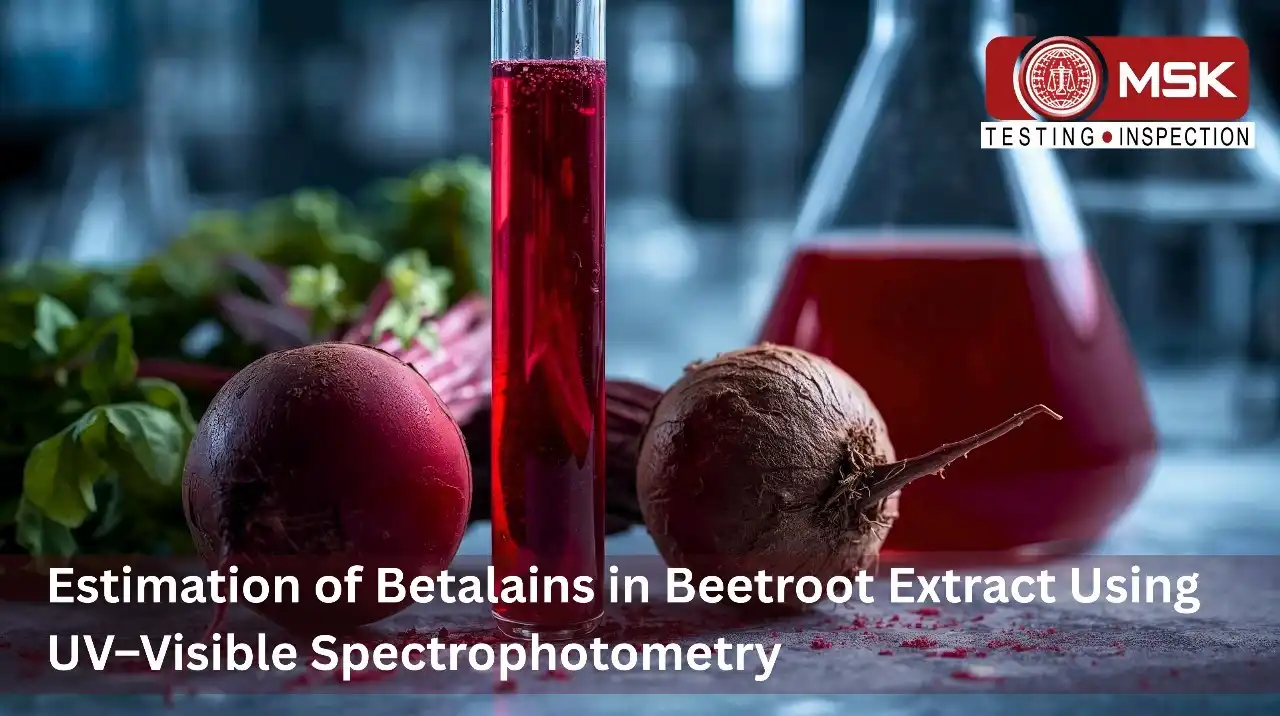
Posted on November 12 2025 By Mitra S.K ADMIN

Posted on September 23 2025 By Mitra S.K ADMIN

Posted on August 01 2025 By Mitra S.K ADMIN

Posted on July 25 2025 By Mitra S.K ADMIN

Posted on July 18 2025 By Mitra S.K ADMIN

Posted on July 01 2025 By Mitra S.K ADMIN
Posted on May 22 2025 By Mitra S.K ADMIN

Posted on January 24 2025 By Mitra S.K ADMIN

Posted on January 24 2025 By Mitra S.K ADMIN
Posted on December 31 2024 By Mitra S.K ADMIN
Posted on December 31 2024 By Mitra S.K ADMIN
Posted on December 31 2024 By Mitra S.K ADMIN
Posted on December 31 2024 By Mitra S.K ADMIN
Posted on December 31 2024 By Mitra S.K ADMIN
Posted on December 03 2024 By Mitra S.K ADMIN
Posted on October 17 2024 By Mitra S.K ADMIN

Posted on October 04 2024 By Mitra S.K ADMIN

Posted on September 13 2024 By Mitra S.K ADMIN

Posted on August 27 2024 By Mitra S.K ADMIN

Posted on August 23 2024 By Mitra S.K ADMIN

Posted on June 27 2024 By Mitra S.K ADMIN

Posted on June 22 2024 By Mitra S.K ADMIN
Posted on June 15 2024 By Mitra S.K ADMIN

Posted on May 24 2024 By Mitra S.K ADMIN
Posted on May 17 2024 By Mitra S.K ADMIN

Posted on May 09 2024 By Mitra S.K ADMIN

Posted on April 20 2024 By Mitra S.K ADMIN
Posted on April 13 2024 By Mitra S.K ADMIN

Posted on April 30 2024 By Mitra S.K ADMIN

Posted on April 29 2024 By Mitra S.K ADMIN
Posted on December 30 2023 By Mitra S.K ADMIN
Posted on December 30 2023 By Mitra S.K ADMIN
Posted on December 30 2023 By Mitra S.K ADMIN
Posted on December 27 2023 By Mitra S.K ADMIN
Posted on December 27 2023 By Mitra S.K ADMIN
Posted on December 27 2023 By Mitra S.K ADMIN
Posted on December 27 2023 By Mitra S.K ADMIN
Posted on December 27 2023 By Mitra S.K ADMIN
Posted on December 27 2023 By Mitra S.K ADMIN
Posted on December 27 2023 By Mitra S.K ADMIN
Posted on December 26 2023 By Mitra S.K ADMIN
Posted on April 05 2022 By Mitra S.K ADMIN
Posted on April 06 2022 By Mitra S.K ADMIN
Posted on April 06 2022 By Mitra S.K ADMIN
Posted on April 06 2022 By Mitra S.K ADMIN
Posted on April 06 2022 By Mitra S.K ADMIN
Posted on April 06 2022 By Mitra S.K ADMIN
Posted on April 06 2022 By Mitra S.K ADMIN
Posted on April 06 2022 By Mitra S.K ADMIN
Posted on April 06 2022 By Mitra S.K ADMIN
Posted on April 06 2022 By Mitra S.K ADMIN
Posted on April 06 2022 By Mitra S.K ADMIN
Posted on April 06 2022 By Mitra S.K ADMIN
Posted on April 06 2022 By Mitra S.K ADMIN
Posted on November 28 2022 By Mitra S.K ADMIN
Posted on April 06 2022 By Mitra S.K ADMIN
Posted on April 06 2022 By Mitra S.K ADMIN
Posted on April 06 2022 By Mitra S.K ADMIN
Posted on November 28 2022 By Mitra S.K ADMIN
Posted on June 14 2022 By Mitra S.K ADMIN