

The source of Diethyl p-Toluene Sulfonyloxy Methyl Phosphonate (DESMP) in spent salt is the parent industrial process in which DESMP is either a product, intermediate, impurity or reaction residual and where inorganic salts are generated during neutralization, quenching or work-up steps. When acids or bases are added to terminate reactions or adjust pH, large quantities of salts are formed and DESMP present in the process stream partitions into or becomes physically entrapped within the salt matrix. Additionally, during solvent extraction and drying operations, traces of DESMP dissolved in the organic phase can be transferred to the salt and remain after solvent removal. Thus, spent salt acts as a secondary carrier of DESMP originating directly from the upstream chemical manufacturing or processing operation.
DESMP absorbs in the UV region and shows adequate sensitivity at 260 nm. The compound is separated using a reverse-phase C18 column with an acidified water–acetonitrile mobile phase and quantified using external standard calibration.
| Chromatographic Conditions | |
| Parameter | Condition |
| Detector | UV |
| Wavelength | 260 nm |
| Column | ZORBAX C18 |
| Mobile Phase | Water : Acetonitrile (70:30 v/v) with 0.2 mL phosphoric acid |
| Flow Rate | 1.5 mL/min |
| Injection Volume | 20 µL |
| Column Oven Temperature | 40 °C |
| Run Time | 35 minutes |
| Mode | Isocratic |
Prepare the mobile phase by mixing water and acetonitrile in the ratio of 70:30 (v/v). Add 0.2 mL of phosphoric acid to the mixture, volume made up to 1000mL, mix thoroughly, sonicate to degas, and filter through a suitable membrane filter before use.
Accurately weigh 10 mg of DESMP reference standard and transfer it into a 10 mL volumetric flask. Dissolve the standard in acetonitrile and make up to volume with the same solvent. Mix well to obtain a standard stock solution of 1 mg/mL.
Accurately weigh 1.0 g of spent salt sample and transfer it into a 10 mL volumetric flask. Add acetonitrile, dissolve completely, and make up to volume. Mix thoroughly to ensure efficient extraction of DESMP. Filter the solution through a 0.2 µm membrane filter before HPLC injection.
Inject 20 µL of the standard and sample solutions into the HPLC system. Quantification is performed using the external standard method by comparing the peak area of DESMP in the sample with that of the standard.


The described HPLC-UV method is simple, reliable, and suitable for routine determination of DESMP in spent salt matrices. The method provides good reproducibility and selectivity and can be adopted for quality control, process monitoring and research applications.
In simple terms, DESMP is found in spent salt because it gets carried along during the normal processing steps used in industry, such as neutralization, washing, and solvent removal. When salts are formed or separated, small amounts of DESMP can become trapped or stick to the salt and are not removed completely. Since DESMP does not easily break down or evaporate, it remains in the spent salt. Therefore, analyzing DESMP in spent salt is important to understand product loss, ensure proper waste handling, and improve overall process efficiency.


Chief Operation, FAMD, Tata Steel Limited..

Sr. General Manager,, Emirates Trading Agency L.L.C..

Mines Manager, Hindustan Zinc Limited, a Vedanta Company.

General Manager, Stevin Rock L.L.C..

Executive Vice President (Works),, DCW Limited.

AVP – Coal Quality & Sales Compliance Head,, PT Indo Tambangraya Megah Tbk (BANPU).

Laboratory Head, MMX.

Shipping Administrator, Mount Gibson Iron Limited.

Senior Director – Asia Pacific Iron Ore Sales,, Cliffs Natural Resources Pty Ltd..

Member, Compass Group (India) Pvt. Ltd.

Posted on May 27 2026 By Mitra S.K ADMIN
Read More
Posted on April 23 2026 By Mitra S.K ADMIN
Posted on February 19 2026 By Mitra S.K ADMIN

Posted on February 19 2026 By Mitra S.K ADMIN

Posted on January 16 2026 By Mitra S.K ADMIN
Posted on January 16 2026 By Mitra S.K ADMIN
Posted on January 16 2026 By Mitra S.K ADMIN
Posted on January 16 2026 By Mitra S.K ADMIN
Posted on January 16 2026 By Mitra S.K ADMIN
Posted on December 16 2025 By Mitra S.K ADMIN
Posted on December 16 2025 By Mitra S.K ADMIN

Posted on December 16 2025 By Mitra S.K ADMIN
Posted on December 11 2025 By Mitra S.K ADMIN
![Estimating Cobalt by UV-Vis Spectroscopy: The [CoCl?]²? Acetone Method](https://mitrask.com/uploads/blogs/1778156837Estimating%20Cobalt.webp)
Posted on December 04 2025 By Mitra S.K ADMIN
Posted on December 04 2025 By Mitra S.K ADMIN

Posted on November 12 2025 By Mitra S.K ADMIN

Posted on September 23 2025 By Mitra S.K ADMIN

Posted on August 01 2025 By Mitra S.K ADMIN

Posted on July 25 2025 By Mitra S.K ADMIN

Posted on July 18 2025 By Mitra S.K ADMIN

Posted on July 01 2025 By Mitra S.K ADMIN
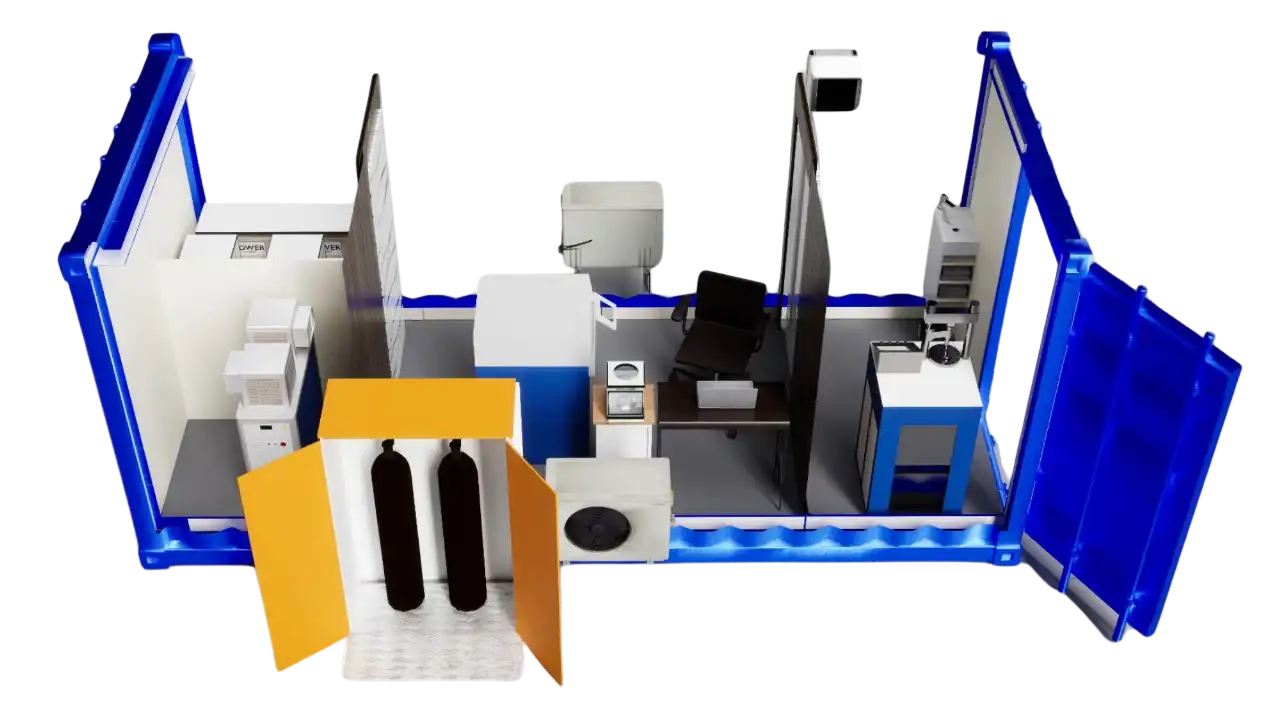
Posted on May 22 2025 By Mitra S.K ADMIN

Posted on January 24 2025 By Mitra S.K ADMIN

Posted on January 24 2025 By Mitra S.K ADMIN
Posted on December 31 2024 By Mitra S.K ADMIN

Posted on December 31 2024 By Mitra S.K ADMIN
Posted on December 31 2024 By Mitra S.K ADMIN
Posted on December 31 2024 By Mitra S.K ADMIN
Posted on December 31 2024 By Mitra S.K ADMIN
Posted on December 03 2024 By Mitra S.K ADMIN

Posted on October 17 2024 By Mitra S.K ADMIN

Posted on October 04 2024 By Mitra S.K ADMIN

Posted on September 13 2024 By Mitra S.K ADMIN

Posted on August 27 2024 By Mitra S.K ADMIN

Posted on August 23 2024 By Mitra S.K ADMIN

Posted on June 27 2024 By Mitra S.K ADMIN

Posted on June 22 2024 By Mitra S.K ADMIN
Posted on June 15 2024 By Mitra S.K ADMIN

Posted on May 24 2024 By Mitra S.K ADMIN
Posted on May 17 2024 By Mitra S.K ADMIN

Posted on May 09 2024 By Mitra S.K ADMIN

Posted on April 20 2024 By Mitra S.K ADMIN

Posted on April 13 2024 By Mitra S.K ADMIN

Posted on April 30 2024 By Mitra S.K ADMIN

Posted on April 29 2024 By Mitra S.K ADMIN

Posted on December 30 2023 By Mitra S.K ADMIN

Posted on December 30 2023 By Mitra S.K ADMIN

Posted on December 30 2023 By Mitra S.K ADMIN

Posted on December 27 2023 By Mitra S.K ADMIN

Posted on December 27 2023 By Mitra S.K ADMIN

Posted on December 27 2023 By Mitra S.K ADMIN

Posted on December 27 2023 By Mitra S.K ADMIN

Posted on December 27 2023 By Mitra S.K ADMIN

Posted on December 27 2023 By Mitra S.K ADMIN

Posted on December 27 2023 By Mitra S.K ADMIN

Posted on December 26 2023 By Mitra S.K ADMIN

Posted on April 05 2022 By Mitra S.K ADMIN

Posted on April 06 2022 By Mitra S.K ADMIN

Posted on April 06 2022 By Mitra S.K ADMIN

Posted on April 06 2022 By Mitra S.K ADMIN

Posted on April 06 2022 By Mitra S.K ADMIN

Posted on April 06 2022 By Mitra S.K ADMIN

Posted on April 06 2022 By Mitra S.K ADMIN

Posted on April 06 2022 By Mitra S.K ADMIN

Posted on April 06 2022 By Mitra S.K ADMIN

Posted on April 06 2022 By Mitra S.K ADMIN

Posted on April 06 2022 By Mitra S.K ADMIN

Posted on April 06 2022 By Mitra S.K ADMIN

Posted on April 06 2022 By Mitra S.K ADMIN

Posted on November 28 2022 By Mitra S.K ADMIN

Posted on April 06 2022 By Mitra S.K ADMIN

Posted on April 06 2022 By Mitra S.K ADMIN

Posted on April 06 2022 By Mitra S.K ADMIN

Posted on November 28 2022 By Mitra S.K ADMIN

Posted on June 14 2022 By Mitra S.K ADMIN